
Wire Concealment
Professional in-wall and on-wall wire hiding for a clean, modern setup.
How Wire Concealment Actually Works
An in-wall kit uses two low-profile plates connected through the wall cavity itself — cable goes in behind the TV, comes out at an outlet-level plate below, and nothing is visible in between except the two small plates. No cutting beyond the two access points is needed as long as the cavity is open, which is the case in most standard drywall construction.
CL2 vs. CL3 Cable Ratings
Any cable we run inside a wall is rated for in-wall use, but not all in-wall cable is the same: CL2 is the standard rating for cable concealed inside a wall cavity, while CL3 is a riser rating required for cable that runs vertically between floors, such as from a living room down to a basement media setup. We match the cable rating to the actual run rather than using one rating everywhere.
Power Kits vs. Outlet Relocation
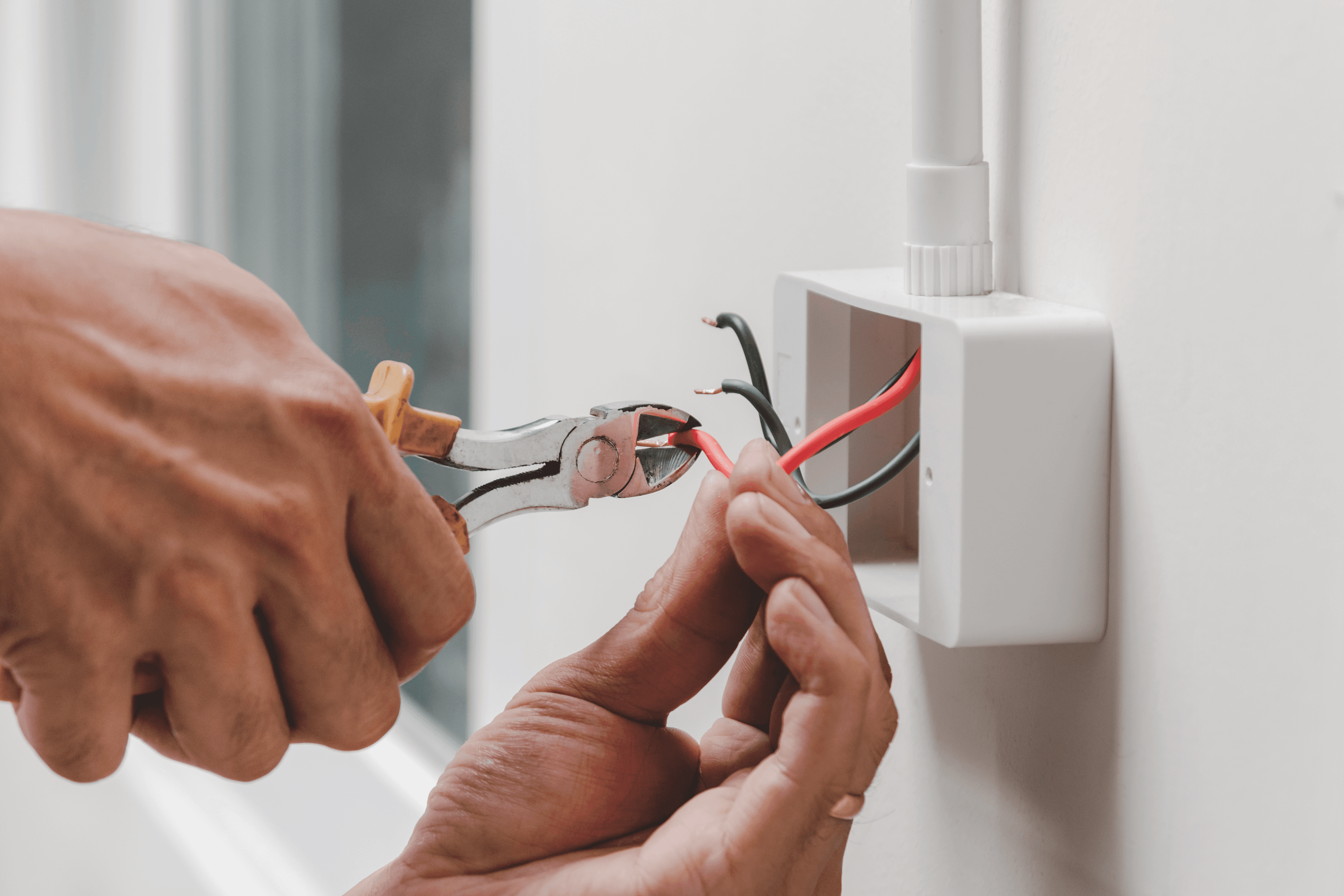
A power kit is a self-contained unit that draws power from an existing outlet without any electrical work, giving you an outlet behind the TV where there wasn't one before. True outlet relocation physically moves the outlet and involves line-voltage wiring, which is licensed electrician scope. We'll tell you upfront which situation you're actually in rather than assuming the simpler option always applies.
When Wire Concealment Isn't Possible
Solid concrete or block walls without an open cavity, and walls with existing electrical or plumbing running through the path, can rule out a true in-wall run. In those cases a paintable surface channel is the realistic option — we'd rather tell you that upfront than promise an in-wall result we can't deliver.
Serving the Kansas City Metro
We add wire concealment to TV mounting appointments throughout the Kansas City metro, on both sides of the state line.